
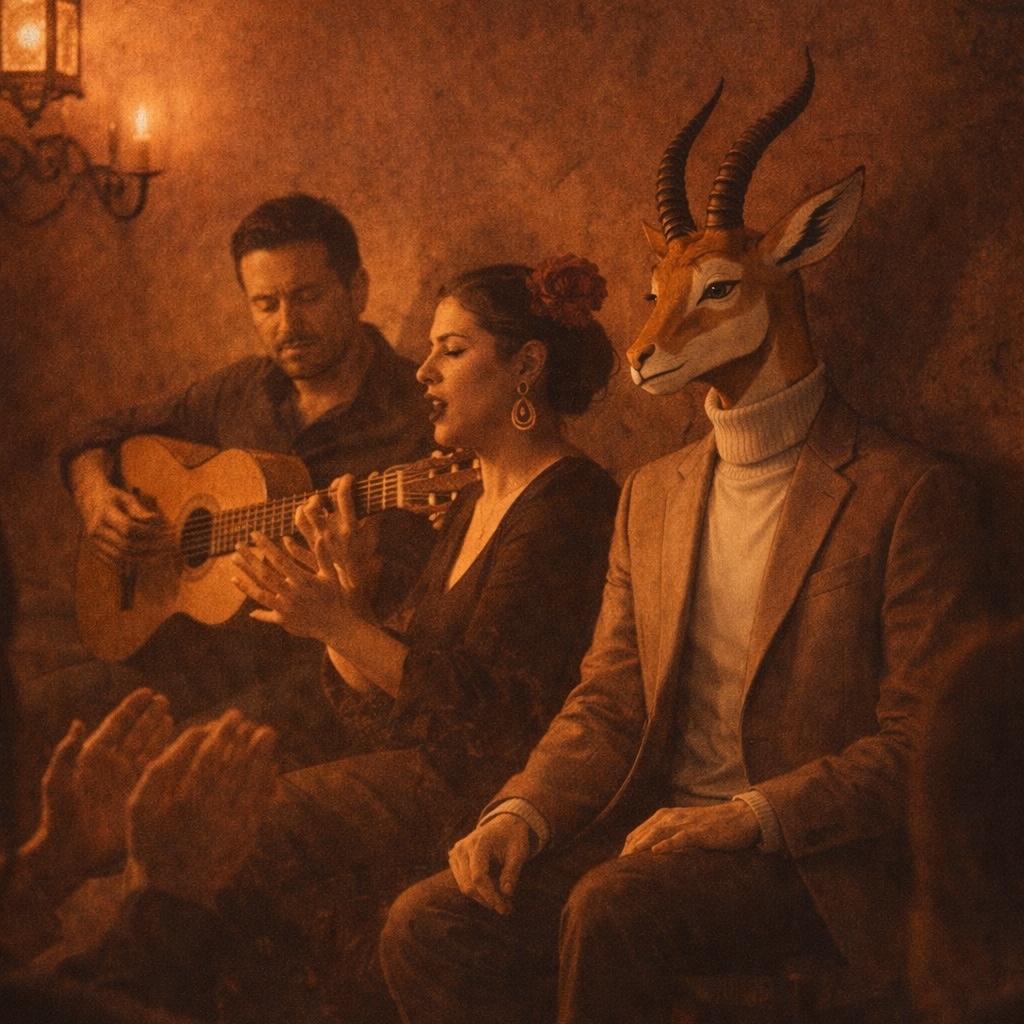
It surprises people that I love flamenco.
They expect something more restrained. Chamber music. Perhaps minimalist piano. Something that matches the blazer.
But flamenco is not chaos. It is architecture disguised as fire.
Take bulerías. On the surface it feels unruly—laughter, palmas, sudden accents that land like hooves on stone. But beneath it lies compás. A 12-beat cycle so precise it might as well be engineered. Space within structure. Freedom within constraint.
I admire that.
The rhythm bends but never breaks. The singer stretches a phrase across the bar line, and yet somehow arrives exactly where she must. There is elasticity without collapse.
Soleá, on the other hand, does not pretend to be festive. It carries weight. The kind of weight that does not shout. It unfolds slowly, as though each line has been carried across generations before being permitted to leave the mouth.
There is genuine pathos there. Not theatrical sorrow—but disciplined grief.
To sit in a corner of a bar during a tertulia is an exercise in selective visibility. I attempt, politely, to fold myself inward. To become a silhouette. This rarely succeeds.
A gazelle-man, however elegantly dressed, is not inconspicuous. There are always glances.
But once the compás settles in, the room reorganizes itself. The eyes return to the singer. The palmas align. The guitar becomes the spine of the air.
And for a moment, I am not observed. I am listening.
Flamenco does not ask me to explain myself. It does not require assimilation. It only demands that I respect the cycle. And that, I can do.